The case, explained
The Diarra Ruling: The EU Court and the Football Transfer Market
6 min read · Updated October 2026 · Editorial oversight: Avv. Federico Papa
The Court of Justice of the European Union recently shook the foundations of the global football transfer market with its ruling on the Lassana Diarra case, whose structural effects are reshaping international regulations. According to press reports, the decision has been hailed as a new Bosman ruling, capable of drastically limiting the power of sports federations to impose sanctions that hinder worker mobility. In this in-depth analysis from «The case explained» column, we will examine how EU law has prevailed over sporting autonomy, ensuring the free movement of players and protecting competition between clubs. Through our usual twin case, we will see how restrictive logic apparently aimed at contractual stability can turn into illegitimate obstacles in the professional labor market.
In brief
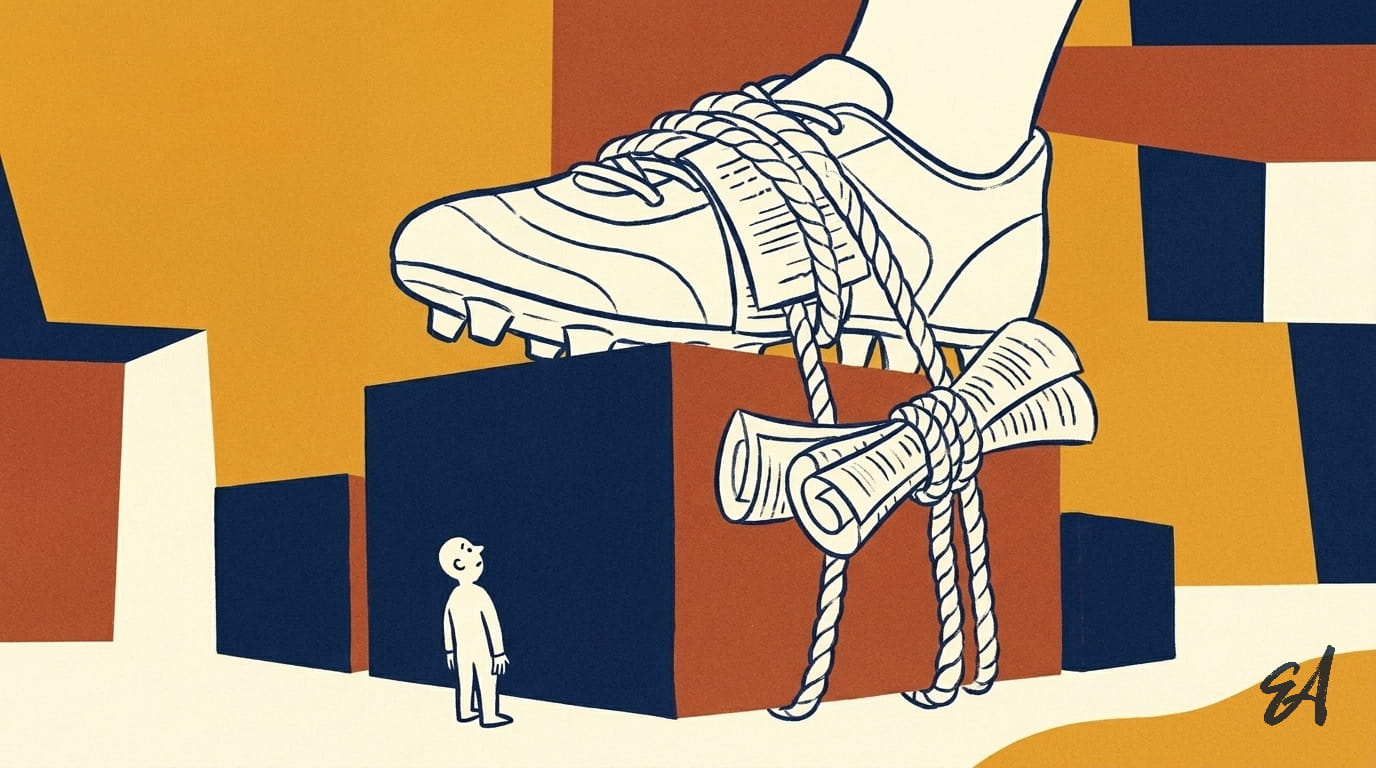
The article examines the CJEU ruling C-650/22, which declared certain FIFA transfer rules contrary to EU law. The case concerns the joint liability of the new club for the indemnity owed by the player in the event of contract termination. Unlike the criminal profiles discussed in other articles concerning sport, this contribution focuses on the free movement of workers and the prohibition of restrictive competition agreements.
The facts
The story began in 2013 when player Lassana Diarra signed a contract with the Russian club Lokomotiv Moscow. According to reports from Reuters and major sports dailies, the relationship ended abruptly the following year due to an alleged breach by the player, leading FIFA to order him to pay 10.5 million euros. The legal breaking point emerged when the Belgian club Charleroi, interested in signing Diarra, abandoned the deal due to FIFA regulations (RSTP) providing for the joint liability of the new club for the indemnity owed and the blocking of the international transfer during the dispute. Diarra then sued FIFA and the Belgian federation seeking damages. The case reached the CJEU via a preliminary reference from the Mons Court of Appeal. The current procedural stage involves the final ruling of the CJEU setting the legal principles, leaving the quantification of damages to the Belgian national judge.

The rules at play
The regulatory focus lies in the Treaty on the Functioning of the European Union (TFEU).
- Article 45 TFEU protects the free movement of workers, prohibiting restrictions that make it excessively burdensome to move from one employer to another in different Member States.
- Article 101 TFEU prohibits agreements between undertakings (including sports associations) that restrict competition within the internal market.
- The FIFA Regulation (RSTP) is the contested source, specifically Article 17 which imposes the financial guarantee of the new club and automatic sporting sanctions. The combination of these rules created, according to the Court, a paralyzing effect that prevents professional mobility and distorts the transfer market.
What the jurisprudence says
Supranational jurisprudence has clarified that sport does not enjoy a free zone from EU law. In the past, the Court had established that transfer rules are lawful only if proportionate and necessary to ensure the stability of competitions. With the Diarra case, the judges went a step further: they ruled that a restriction by object of competition occurs when rules are inherently capable of discouraging the recruitment of workers. European jurisprudence has therefore reiterated that the goal of contractual stability cannot be pursued through blind and disproportionate sanctions that zero out the business risk of selling clubs at the expense of individual rights.
- Try edit.legal AI
Analysis drafted and verified with edit.legal
To verify the provisions cited in this article, we used edit.legal. Test our legal AI on official sources and apply it to your own matters.
What it teaches professionals
- Always assess the compliance of sectoral or associative regulations with the principles of economic public policy of the European Union.
- Carefully monitor joint and several liability clauses imposed by third parties when hiring «contested» personnel.
- Use the tool of preliminary reference to the CJEU when the internal sporting or professional legal system appears impervious to the fundamental rights of workers.
References: Articolo 45 TFUEArticolo 101 TFUEFIFA RSTP Articolo 17
Related cases

Frequently asked questions
What changes for players after the Diarra ruling?
Players will have more freedom to terminate their contracts and sign with a new club without the latter being automatically ordered to pay huge sums or face a transfer ban.
Can sports clubs still claim compensation?
Yes, but compensation must be calculated based on real and proportionate costs, and cannot be structured in a way that prevents the worker's mobility.
Does this ruling only apply to football?
No, the principle of free movement and the prohibition of restrictive competition agreements applies to all regulated professions and economic sectors within the EU.
Verified legal research and drafting with edit.legal
Legal research and drafting with citations checked against official databases. edit.legal is free to try, no credit card.
Try edit.legal for free