The case, explained
Mafia Infiltration and 231: The Milan Stadium Case
7 min read · Updated October 2026 · Editorial oversight: Avv. Federico Papa
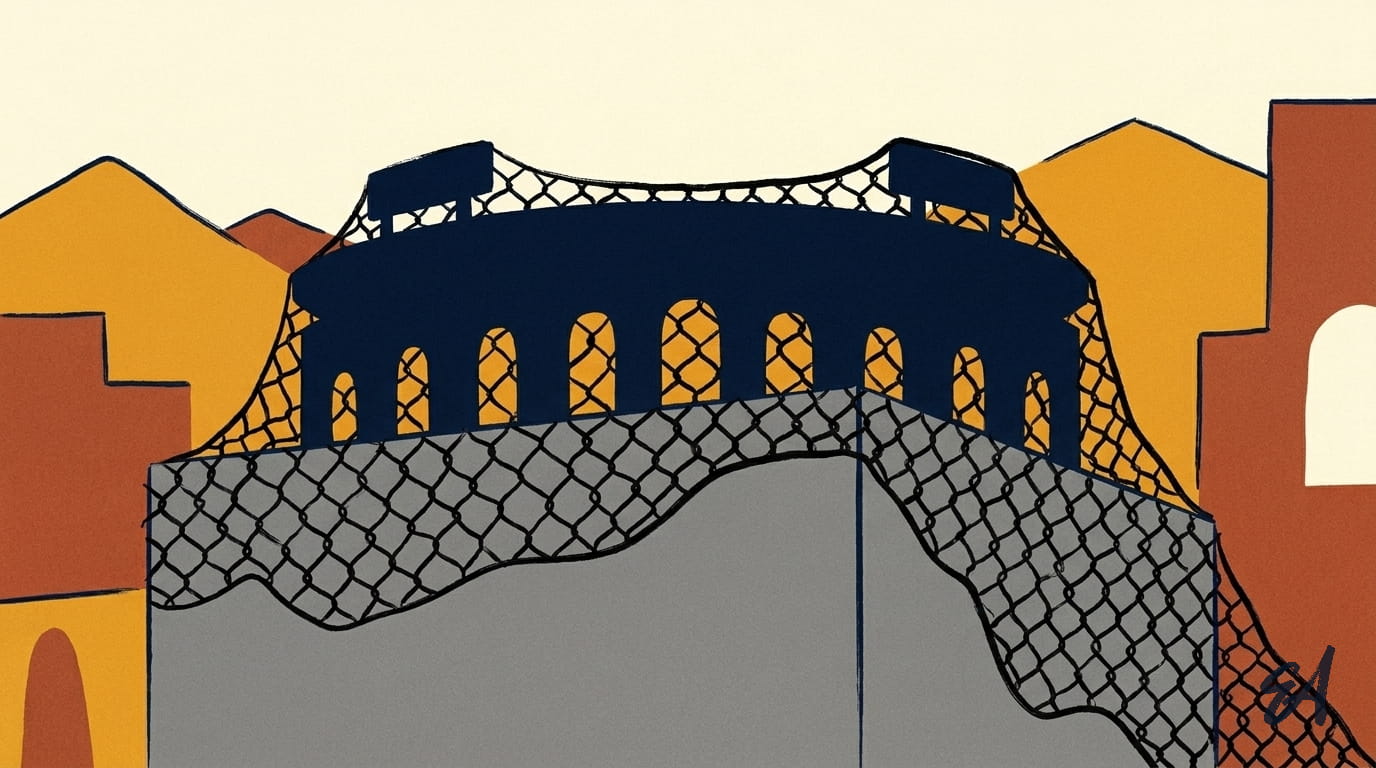
In October 2024, the preliminary investigations of the so-called Double Curve inquiry revealed the penetration of organized crime clans into the management of commercial services connected to the Milan stadium. According to national press reports, including «Ansa» and «Corriere della Sera», the investigation has brought to light a dense network of illicit interests ranging from ticket scalping to parking control, involving key figures from organized fan groups. The case, which originated from the tragic 2024 blood incident involving Andrea Beretta, led investigators to analyze the role of professional clubs not only as potential victims but as entities required to answer for the robustness of their prevention protocols. This case represents a turning point for the application of Legislative Decree 231/2001 in the sports sector, focusing on the concept of negligent facilitation and the liability of entities in monitoring relationships with the most extreme fan factions. While other aspects related to organizational fault are covered in dedicated articles within this column, the analysis here focuses on the specific criticalities of facility management and the prevention of mafia influence in sports-related ancillary activities. Through the reconstruction of Gaio Sventura's twin case, we will examine how a lack of controls can turn a sports club into an unconscious tool in the hands of the underworld.
In brief
The article analyzes the Double Curve investigation, focusing on the liability of sports clubs under Legislative Decree 231/2001 and the prevention of mafia infiltration. It examines hypotheses of negligent facilitation in ticket sales, parking, and merchandising management, distinguishing between the role of an extortion victim and punishable organizational inertia. Through the twin case of Gaio Sventura, it illustrates the risks of a soft approach to organized fan groups and the effectiveness of collaborative prevention measures provided by the Anti-Mafia Code.
The fact
According to reports by «Il Sole 24 Ore» and «Corriere della Sera», the Double Curve investigation culminated in September 2024 with the arrest of 19 members of the organized fan groups of Inter and Milan, including Andrea Beretta, Marco Ferdico, and Luca Lucci. The Milan Prosecutor's Office (DDA) investigations hypothesized the existence of a non-belligerence pact between the two curves to control profits from parking, bars, and merchandising. A pivotal event was the murder of Antonio Bellocco, a figure linked to the 'Ndrangheta, which occurred in September 2024 at the hands of Andrea Beretta. Currently, the procedural stage is that of preliminary investigations (October 2024). The clubs F.C. Internazionale and A.C. Milan are not under investigation for conspiracy crimes but have been subject to prevention proceedings aimed at verifying whether the companies indirectly facilitated these dynamics through deficiencies in their 231 organizational models. National newspapers have highlighted intolerable pressure exerted by ultras on executives and members to obtain logistical and economic benefits.

The laws at play
The regulatory framework centers on Legislative Decree 231/2001, which governs the administrative liability of entities. In this context, the capacity of the Organization and Management Model (MOG) to prevent crimes committed for the benefit of the company, including organized crime, is relevant.
- Art. 416-bis of the Criminal Code punishes mafia-type association: the mafia method aggravating factor (416-bis.1 c.p.) is charged against the Curva Nord for ties to the 'ndrangheta, while the Curva Sud is charged with simple criminal association (416 c.p.).
- Art. 34 of Legislative Decree 159/2011 (Anti-Mafia Code) provides for judicial administration, a prevention measure applicable when a company, despite not being mafia-owned, negligently facilitates individuals under investigation for criminal association.
- Art. 629 of the Criminal Code defines the crime of extortion, which occurs when the company gives in to the fans' demands under threat, finding itself on the delicate borderline between victim and facilitator due to lack of oversight.
What the case law says
Legitimacy jurisprudence has clarified that sports clubs have an obligation to adopt specific prevention models for the risk of environmental conditioning by fan groups. The established orientation distinguishes between the company as a victim of extortion, which reports promptly, and the so-called facilitating victim, which through inertia or convenience maintains opaque relationships with individuals linked to crime. Prevention judges have emphasized that the application of judicial administration is not punitive but therapeutic, serving to decontaminate the entity from external infiltrations. Regarding 231 liability, it has been specified that the MOG must include rigorous protocols for ticket sales and the management of outsourced services, as organizational fault manifests precisely where the corporate structure allows third parties to derive illicit profits by exploiting the club's official channels.
- Try edit.legal AI
Analysis drafted and verified with edit.legal
To verify the provisions cited in this article, we used edit.legal. Test our legal AI on official sources and apply it to your own matters.
What it teaches professionals
- The importance of thorough due diligence not only on direct suppliers but also on entities effectively operating within corporate spaces.
- The need to map risks of environmental conditioning, including specific protocols in the MOG for managing relationships with aggressive interest groups.
- The strategic role of monitoring cash flows from ancillary activities (parking, bars), often underestimated in 231 risk analyses.
- The utility of implementing transparent dialogue channels with public security authorities to formalize the state of subjection and prevent charges of negligent facilitation.
References: D.Lgs. 231/2001D.Lgs. 159/2011Art. 416 c.p.Art. 416-bis c.p.Art. 416-bis.1 c.p.Art. 629 c.p.
Related cases

Frequently asked questions
Can a company be put under administration if its employees are victims of threats?
Yes, if the company has not adopted suitable measures to protect employees and report the facts, indirectly favoring the criminal organization through negligent facilitation.
What happens to ongoing contracts if judicial administration is triggered?
The judicial administrator has the power to verify the lawfulness of contracts, being able to terminate polluted ones or renegotiate terms to eliminate criminal profits.
Does the 231 Model always protect a sports club from sanctions?
The model protects only if it is effectively implemented, updated to sector-specific risks, and if the supervisory body has correctly performed its monitoring duties.
Verified legal research and drafting with edit.legal
Legal research and drafting with citations checked against official databases. edit.legal is free to try, no credit card.
Try edit.legal for free