The case, explained
The "Punitive System" in Companies and Workplace Violence
6 min read · Updated August 2026 · Editorial oversight: Avv. Federico Papa
The recent ruling by the Court of Cassation marks a turning point in the definition of workplace violence, shifting focus from physical aggression to systematic moral coercion. According to national press reports, the supreme judges confirmed the criminal relevance of a management system based on constant threats and the deprivation of fundamental human rights, qualifying such conduct as extortion. While other aspects of the case, such as technological monitoring and the right to disconnect, are covered in dedicated articles in this column, this post analyzes the criminal dimension of the so-called corporate punitive system. By reconstructing the real case and using a twin case, we will explore how case law is redefining the boundaries between managerial power and violence, offering new tools to protect worker dignity.
In brief
This article examines a recent Cassation ruling, which upheld extortion convictions for corporate executives who established a systematic punitive system. Unlike cases on algorithms and GPS, this study focuses on moral violence as a tool of coercion. It analyzes the distinction between exploitation and threats of dismissal, highlighting how worker dignity is criminally protected against employer arbitrariness and extreme hazardous conditions, emphasizing the shift from physical to moral violence in legal interpretations.
The facts
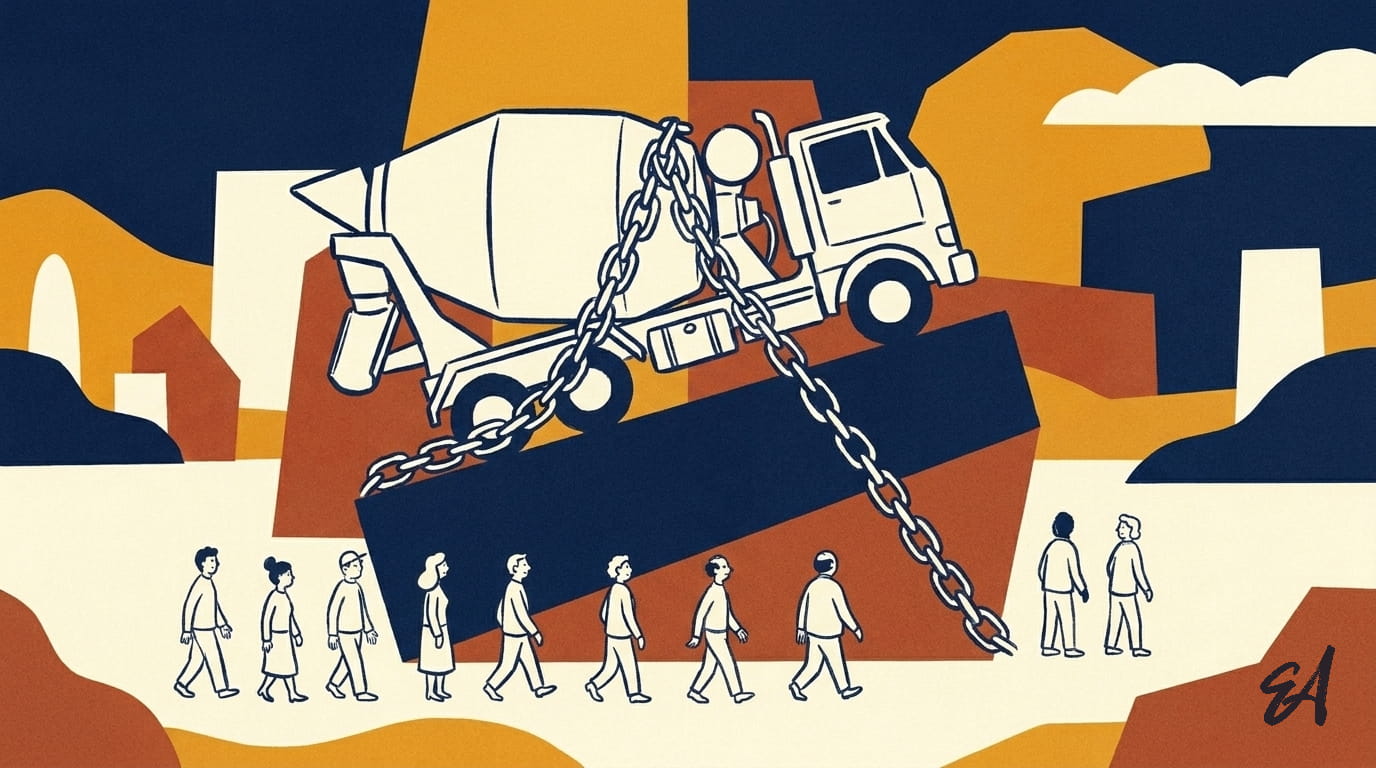
The case brought before the Court of Cassation involves a company operating in the concrete sector, whose executives were accused of establishing an organized climate of fear. According to press reports, the proceedings concluded with a final judgment of the Court of Cassation confirming the convictions handed down in the lower courts. The judges established the existence of a true punitive system with scalar progression: employees were forced into grueling shifts of up to 20 consecutive hours and high-risk tasks, such as painting silos without any personal protective equipment. The threat of dismissal was systematically used to break all resistance, constituting not merely a labor law violation, but a coercion of will aimed at obtaining an unfair profit from savings on safety and personnel costs. In one emblematic episode, an injured worker was forced to make a false statement to avoid inspections, under threat of losing their job.

The rules at play
The legal core of the case lies in Art. 629 of the Criminal Code (Extortion), applied because the threat of dismissal was aimed at obtaining degrading or dangerous performance, securing an unfair advantage for the company. This is coupled with Art. 603-bis of the Criminal Code (Illicit Intermediation and Labor Exploitation), although the Cassation Court prioritized extortion due to the presence of a specific vis compulsiva that nullifies self-determination. On the civil and preventive side, Art. 2087 of the Civil Code, which imposes the duty to protect the physical and moral integrity of the worker, and Legislative Decree 81/2008 are relevant, as their systematic violations, such as lack of PPE and rest periods, formed the objective basis of the criminal conduct.
What case law says
Case law from the Court of Cassation has clarified that violence relevant for criminal purposes does not necessarily require physical contact, fully encompassing so-called moral violence. According to now consolidated jurisprudence, the prospect of unfair harm, such as the loss of income in a precarious context, is suitable to constitute extortion when used to impose working conditions contrary to the law or human dignity. The court also specified that the worker's consent to extra or dangerous tasks is entirely irrelevant if given under oppressive hierarchical subordination, as the freedom of choice required to qualify the agreement as a legitimate contractual synallagma is absent.
- Try edit.legal AI
Analysis drafted and verified with edit.legal
To verify the provisions cited in this article, we used edit.legal. Test our legal AI on official sources and apply it to your own matters.
What it teaches professionals
- Revision of organizational models: lawyers must advise companies to eliminate practices that could be interpreted as punitive or retaliatory systems.
- Safety oversight: lack of PPE is not just an administrative risk, but can become the objective element of an extortion crime if combined with hierarchical pressure.
- Management of dissent: any worker objection regarding health and safety must be managed through transparent procedures, avoiding any link between technical feedback and disciplinary action.
- Criminal risk analysis: it is essential to evaluate the robustness of incentive and control systems in light of the definition of moral violence expressed by the supreme judges.
References: Art. 629 c.p.Art. 603-bis c.p.Art. 2087 c.c.D.Lgs. 81/2008
Related cases

Frequently asked questions
When does the threat of dismissal become extortion?
It becomes extortion when used to force the worker to accept conditions contrary to the law or their fundamental rights, thereby obtaining an unfair profit for the company.
What is meant by a scalar progression punitive system?
It refers to an organized corporate practice that gradually increases pressure and retaliation against workers who do not comply with illicit or dangerous directives.
Can a worker who accepts grueling shifts still report the employer?
Yes, because consent given under the threat of losing one's job is considered invalid by case law and does not exclude the criminal liability of the employer.
Verified legal research and drafting with edit.legal
Legal research and drafting with citations checked against official databases. edit.legal is free to try, no credit card.
Try edit.legal for free