The case, explained
Lawyers' fees and E-trial: Supreme Court on the increase for IT techniques
6 min read · Updated November 2026 · Editorial oversight: Avv. Federico Papa
According to reports in the specialized press in October 2024, the United Sections of the Supreme Court have resolved a long-standing conflict regarding the increase in legal fees linked to the use of the Electronic Civil Trial (PCT). The decision clarifies whether the economic bonus for lawyers who facilitate the judge's work with hyperlinked documents is an automatic right or a discretionary choice of the magistrate. While other aspects of judicial fee assessment are covered in dedicated articles in this column, this analysis focuses exclusively on the technical requirements for the 30% increase. The twin case will illustrate how care in digital drafting can affect the final bill of a professional assisting a small business.
In brief
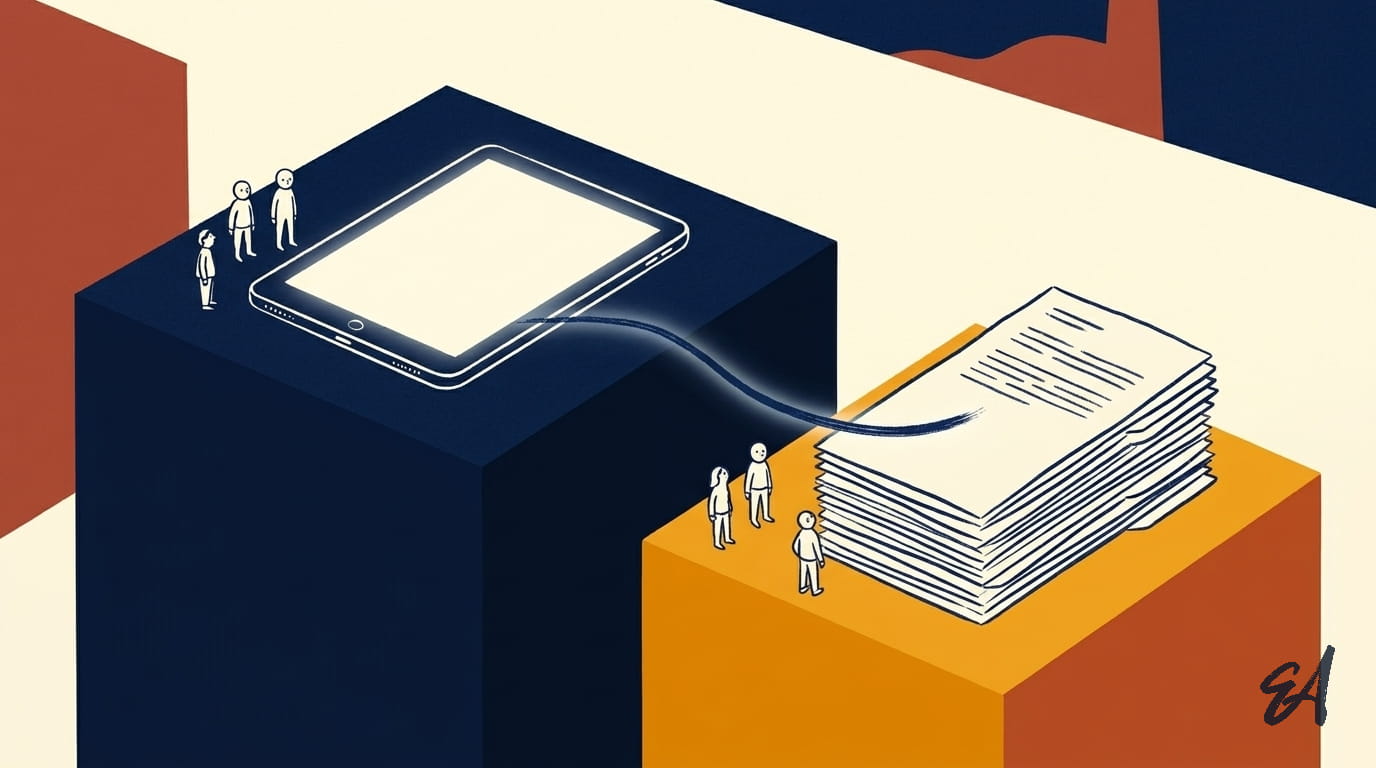
The Supreme Court, through its United Sections, established that the 30% fee increase for using IT techniques (hyperlinks, searchable indexes) is not automatic. The judge has the power and duty to evaluate their actual utility but must provide a detailed explanation for any denial if the lawyer has provided documents structured to facilitate consultation.
The fact
The case arises from the appeal of a professional fee assessment decree. According to reports from outlets such as NT+ Diritto and Ipsoa Quotidiano Giuridico, a lawyer requested the application of the 30% increase provided by forensic parameters for filing documents structured with hyperlinks and searchable indexes. The lower court judge had denied the benefit, considering that these methods did not lead to an actual saving of time or a simplification of the decision-making process. The case reached the Supreme Court to resolve the conflict between those who considered the increase an automatic result of simply using advanced techniques and those who saw it as a purely discretionary power of the magistrate. The procedural stage concluded with the definitive ruling of the Civil United Sections.

The rules at play
- Art. 4, paragraph 1-bis, D.M. no. 55/2014 is the key rule: it provides that the fee is generally increased by 30% when electronic documents are drafted with IT techniques that facilitate consultation, such as hypertext navigation between the document and attachments.
- Art. 13 of Law no. 247/2012 establishes the principle of proportionality between fees and the quality of the work performed, delegating the definition of parameters to ministerial decrees.
- The rules on the Electronic Civil Trial (PCT) define the minimum technical standards for filing, relative to which the increase acts as a reward for additional efficiency that goes beyond mere legal obligation.
What the case law says
Supreme Court case law long fluctuated between two opposing interpretations. A first orientation held that the increase was due as a matter of right whenever the use of links or searchable indexes was established, with no room for the judge's assessment. A second orientation, conversely, qualified the increase as merely optional, subject to proof of a concrete advantage for judicial activity. With the final decision, the United Sections clarified that the increase is not an automatic penalty against the counterparty, but an incentive for quality. The magistrate has the power and duty to evaluate its merit: they cannot deny it arbitrarily if the document is objectively more usable, but they should not grant it if the techniques used are merely formal and do not simplify the reading of the case file at all.
- Try edit.legal AI
Analysis drafted and verified with edit.legal
To verify the provisions cited in this article, we used edit.legal. Test our legal AI on official sources and apply it to your own matters.
What it teaches professionals
- Do not limit yourself to filing generic PDF files, but invest in creating searchable indexes and internal/external hyperlinks.
- Always state the presence of these technical measures in the bill of costs, expressly citing Art. 4, paragraph 1-bis of D.M. 55/2014.
- If the increase is not granted, check for a specific motivation in the assessment order to evaluate a possible appeal.
- Consider the technological care of the document not just as a courtesy to the judge, but as a constitutive element of your own professional value.
References: D.M. n. 55/2014Legge n. 247/2012Orientamento delle Sezioni Unite sulla maggiorazione per tecniche informatiche
Related cases

Frequently asked questions
Is the 30% increase due for simple electronic filing?
No, simple electronic filing is mandatory by law and does not entitle one to increases; the increase is provided only for the use of additional IT techniques such as hyperlinks and searchable indexes.
What happens if the judge does not provide reasons for denying the increase?
If the judge denies the requested increase without providing a detailed explanation, the fee assessment order can be appealed for violation of the law and lack of motivation.
Is it possible to combine this increase with the one for defending multiple parties?
Yes, the increase for IT techniques concerns the quality of the document and can be combined with other increases provided by forensic parameters, such as those for complexity or plurality of parties.
Verified legal research and drafting with edit.legal
Legal research and drafting with citations checked against official databases. edit.legal is free to try, no credit card.
Try edit.legal for free