The case, explained
The Case of AI Hallucinations in the Court of Cassation
5 min read · Updated June 2026 · Editorial oversight: Avv. Federico Papa
Recent developments in case law confirm the Supreme Court's rigorous approach regarding technological integration in criminal proceedings. According to reports in the specialized press, the case stems from an appeal in which the defense relied on legal precedents that proved to be entirely non-existent, the result of a generative error by the software used. In this article, we analyze how the lawyer's duty of diligence prevails over technical automation, reconstructing the stages of the review of legality. Finally, we present a didactic twin case to illustrate the concrete risks and protection strategies for professionals using AI tools.

In brief
The article analyzes the Cassation decision on the inadmissibility of an appeal containing AI-generated hallucinations. It examines Articles 606 and 591 of the Code of Criminal Procedure, along with ethical duties of truthfulness and diligence. Through a transfigured twin case, it illustrates the transition from technological error to professional liability, offering practical guidance to prevent disciplinary and procedural sanctions arising from the unverified use of new technologies in drafting legal documents.
The fact
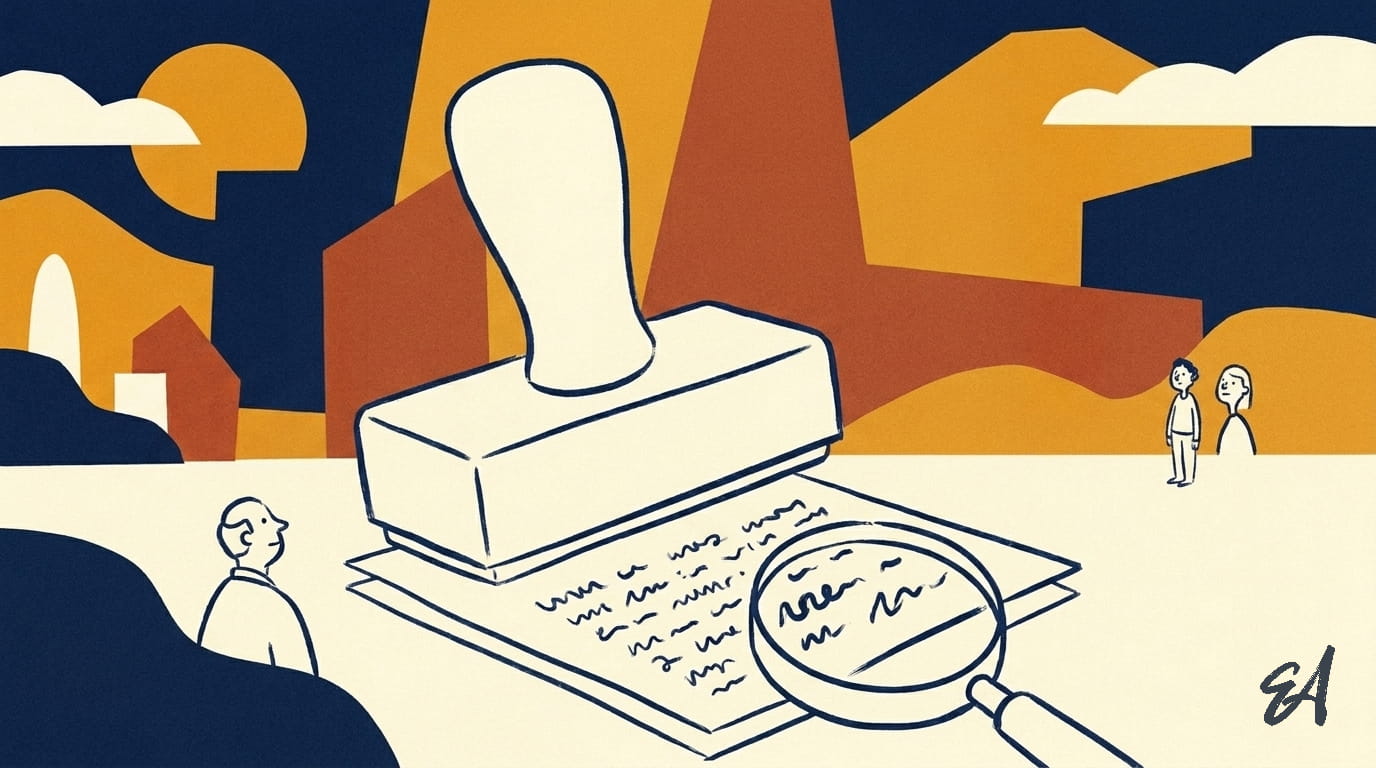
According to reports by Il Sole 24 Ore, Sistema Penale, and Altalex, a lawyer filed an appeal before the Sixth Criminal Section of the Court of Cassation including extensive excerpts of reasoning and headnotes referring to rulings that were never delivered. During the examination of the filing, the judges verified that the case numbers and publication years provided were non-existent.
The lawyer admitted to using generative AI software to draft the document, relying on the output produced by the system without performing any precise verification. The proceedings before the Court of Cassation concluded with a final ruling declaring the appeal inadmissible and ordering the transmission of the documents to the Bar Council for disciplinary evaluation.
The rules in play
The central legal provisions are Art. 606 c.p.p., which establishes the grounds for appeal to the Court of Cassation, and Art. 591 c.p.p., which mandates inadmissibility in the case of a lack of specificity. At the constitutional level, Art. 111 on due process is relevant, requiring compliance with the principles of fairness and procedural loyalty.
Regarding professional conduct, the Code of Conduct for Lawyers invokes Art. 12 (duty of diligence) and Art. 50 (duty of truthfulness), which mandate that lawyers verify the accuracy of all data and legal citations included in procedural filings.
What case law says
High court case law has clarified that an error induced by a technological tool cannot be equated to a material error, such as a simple typo. The court established that introducing non-existent precedents violates the principle of self-sufficiency of the appeal and compromises the judicial function.
The so-called Human-in-the-loop principle has thus been reaffirmed: final responsibility for the document's content rests solely with the professional who signs it, who retains the non-delegable duty to filter and validate every algorithmic output.
- Try edit.legal AI
Analysis drafted and verified with edit.legal
To verify the provisions cited in this article, we used edit.legal. Test our legal AI on official sources and apply it to your own matters.
What it teaches professionals
- Never incorporate AI-generated outputs without thorough cross-referencing against official legal databases.
- Thoroughly document the human review process performed on documents drafted with technological assistance.
- Consider including indemnity clauses in licensing agreements with software providers, keeping in mind that they cannot be asserted in criminal or disciplinary proceedings.
- Maintain ongoing professional development on AI limitations, paying specific attention to AI hallucinations and output patterns.
References: Art. 606 c.p.p.Art. 591 c.p.p.Art. 111 CostituzioneArt. 12 Codice Deontologico ForenseArt. 50 Codice Deontologico Forense
Related cases

Frequently asked questions
What sanctions does a lawyer risk for citing false rulings due to AI error?
Procedurally, the appeal may be declared inadmissible, accompanied by an order to pay litigation costs and a monetary penalty to the Fine Fund. Deontologically, disciplinary sanctions imposed by the District Disciplinary Council range from a formal warning or censure to suspension from the practice of law.
Is there a statute of limitations for ethical liability in these cases?
Disciplinary action against a lawyer is subject to a six-year statute of limitations from the commission of the act, pursuant to Art. 56 of Law No. 247/2012. However, the limitation period is interrupted by specific procedural actions, subject to the maximum overall limit prescribed by law.
What should be done if one realizes they filed a document with AI hallucinations?
If a professional discovers the inclusion of non-existent or inaccurate citations, the duties of fairness and loyalty require prompt disclosure to the court and opposing counsel via an explanatory brief or note of correction. Spontaneous action taken to restore the accuracy of facts and legal citations is relevant both in evaluating intent during disciplinary proceedings and in mitigating procedural consequences.
Verified legal research and drafting with edit.legal
Legal research and drafting with citations checked against official databases. edit.legal is free to try, no credit card.
Try edit.legal for free